You start the car and it roars like a racing car. That's often how drivers find out their catalytic converter has been cut off overnight. It's a quick crime for thieves and an expensive, disruptive one for you. Here's what UK police recommend to make your car a harder target.
Key takeaways
- Hybrids, older Toyota and Honda models, vans and SUVs are most often targeted, but any car can be hit.
- Park in a garage if you can, or somewhere well lit with the converter end against a wall or kerb.
- Ask your dealer about a manufacturer-approved guard, and have the converter marked and registered.
- If you see someone under a jacked-up car, call 999 and don't approach them.
Why thieves target catalytic converters
A catalytic converter sits in the exhaust and cleans up harmful gases. It contains precious metals such as platinum, palladium and rhodium, and police.uk says thieves can remove one in less than a minute, then sell it through scrapyards, online or overseas.
Thefts happen most often in car parks, but they can happen anywhere, including on driveways and residential streets.
Step 1: Find out if your car is at risk
Police.uk says hybrid vehicles are targeted most, because their metals are more valuable. Avon and Somerset Police explains that a hybrid uses its petrol engine less, so the converter stays in better condition.
West Yorkshire Police lists older Toyota and Honda models and some hybrids as the cars most often targeted in its area, along with vans and SUVs, where the ride height makes the exhaust easier to reach. If you drive one of these, the rest of this guide matters more.
Step 2: Park to make it harder
Where you leave the car is free to change and makes a real difference. Police advice is to:
- use a locked garage overnight if you have one
- otherwise park somewhere well lit and overlooked
- park with the converter end of the car close to a wall, fence or kerb
- avoid parking half on the pavement, which makes it easier to get underneath
- in a public car park, park among other cars and look for a Park Mark approved car park
Not sure where your converter is? It's in the exhaust, usually towards the front half of the car. Your garage can show you.
Step 3: Fit a guard or lock
Police.uk suggests asking your dealer about locks or guards that are approved by the vehicle manufacturer and tested to Sold Secure Gold. These fit around the converter or reinforce its fixings so it takes much longer to remove.
Other options police forces mention include asking a garage to weld the converter's bolts so they can't simply be undone, and an alarm with a tilt sensor that goes off if someone jacks the car up.
Step 4: Mark and register the converter
Police advise marking the converter with a forensic marker or etched serial number and registering it. The National Police Chiefs’ Council explains that forensic marking can link even a fragment back to the vehicle it came from, which makes a marked converter harder for thieves to sell and easier to trace.
If you see it happening, or it has happened
Signs a theft is under way include a car being raised on a jack in a car park or street, and a loud drilling or cutting sound coming from underneath it.
If you find your converter has already gone, report it to the police online, by calling 101 or at a police station, and get a crime reference number. You'll usually need that for your insurer. Have a garage check the car before you drive it. If the car itself is ever taken, our stolen car checklist covers what to do next.
Frequently asked questions
Which cars are most at risk of catalytic converter theft?
Police.uk says hybrids are targeted most because their metals are worth more, but any vehicle can be at risk. West Yorkshire Police names older Toyota and Honda models, some hybrids, vans and SUVs, because a higher ride height makes the exhaust easier to reach.
How do I know if my catalytic converter has been stolen?
Police forces describe the theft itself as a car being jacked up and a loud drilling or cutting sound from underneath. Afterwards, the most common sign is that the car sounds far louder than normal when you start it. If you suspect it's gone, have a garage check before you drive anywhere.
Can I stop it being stolen completely?
No single measure can promise that. Police advice is to layer things up: park carefully, fit a guard or lock approved by the manufacturer, and mark and register the converter so it's harder to sell.
Who do I report catalytic converter theft to?
Call 999 if it's happening now. If it has already happened, report it to your local police online, by calling 101 or at a police station. You can also report anonymously to Crimestoppers on 0800 555 111.
Drift
Know where your car is
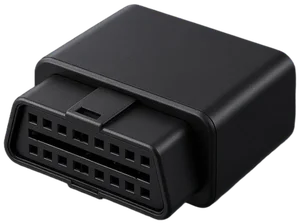
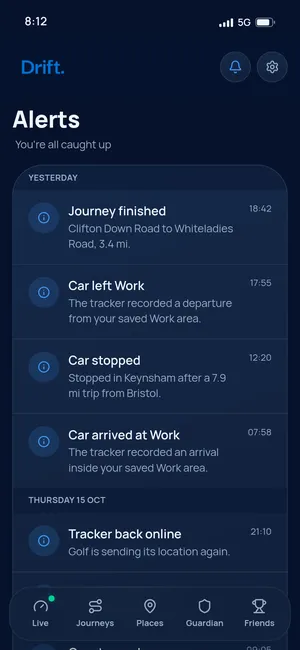
Drift is a small plug-in tracker and web app that shows your car on a live map and alerts you if it moves when it shouldn't. It can't promise to get a car back, but it helps you and the police know where it is.
See how Drift works